Ramayana Movie Review: A visually stunning epic that deserves the big screen watch
Nitesh Tiwari brings India's celebrated epic to the big screen, with Ranbir Kapoor, Sai Pallavi and Yash leading a visually spectacular and immersive cinematic experience.
Ramayana Part 1 Movie Review
A grand visual upgrade to India's timeless story
Performances
Story & Narration
Technical Aspects & Music
VFX, AI & Dubbing
Ramayana (Part 1) is a spectacular cinematic experience that brings one of India’s most celebrated epics to the big screen on an unprecedented scale. Directed by Nitesh Tiwari, the film impresses with its filmmaking and attention to detail. The cinematography, visual effects, editing, screenplay and production design come together to create an immersive cinematic world. The storytelling remains engaging for the most part, while the director deserves credit for maintaining a balance in dialogue delivery, expressions and performances without making the dramatic moments feel excessively theatrical. The Tamil dubbing also deserves special appreciation. The lip-sync, dialogue delivery and voice adaptation are remarkably well executed, making the performances of the predominantly Hindi-speaking cast feel natural and convincing in Tamil.
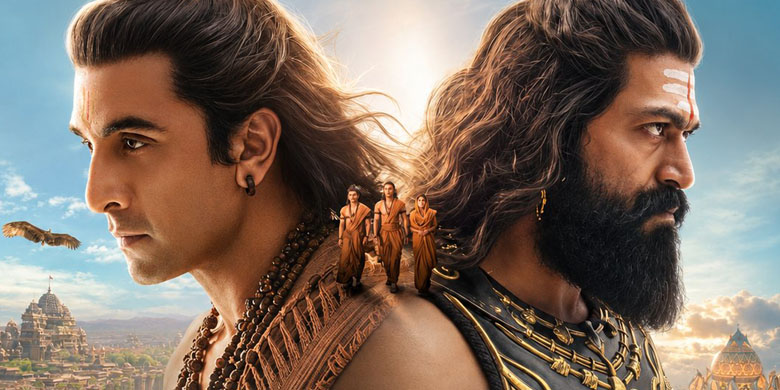
One of the film’s biggest strengths is undoubtedly its casting and the performances of its principal actors. Ranbir Kapoor fits the role of Lord Rama with his composed demeanour and restrained approach. His portrayal brings a sense of innocence and dignity to the character, while the film provides him with the necessary heroic elevation at crucial moments. Sai Pallavi is equally impressive as Sita, bringing grace, emotional depth and strength to the character. However, it is Yash who emerges as the biggest highlight of the film. His menacing screen presence, commanding body language and powerful portrayal of Ravana make every appearance count. The character also receives considerable attention through its writing, particularly in the scenes that explore his personality, determination and multiple facets.
The film truly comes alive through its visual spectacle and large-scale action sequences. The opening portions featuring Ravana establish the character effectively, while the aerial confrontation between Ravana and Jatayu stands out as one of the most impressive sequences. The pre-climax portions also showcase the technical team’s ability to recreate the epic’s larger-than-life moments. Moreover, the encounter between Rama and the army of rakshasas provides some of the film’s strongest heroic moments. The visual effects, computer-generated imagery and 3D implementation deserve considerable appreciation. The detailing across the different environments and action blocks adds to the immersive experience. The use of AI-assisted lip-sync technology is another notable technical achievement, helping the film maintain consistency across its multilingual presentation.
Another interesting aspect is the musical contribution of A.R. Rahman and Hans Zimmer. Rahman’s melodies, musical notes and subtle compositions woven into the background score add richness to the film’s soundscape. While the music works well in several portions, it does not always reach the emotional heights one would expect from such a prestigious collaboration. However, the film also understands that music need not accompany every moment. At times, silence plays an equally important role, allowing the visuals, expressions and emotions to communicate on their own. This approach works particularly well in certain sequences, creating an atmosphere that does not necessarily require a powerful musical intervention. The songs also have their moments, adding to the overall musical experience.
Despite its technical achievements, Ramayana Part 1 has a few noticeable shortcomings in its writing. The central story is familiar to audiences, and the film does not attempt any significant reinvention or unnecessary fictional additions. However, this also makes certain dramatic portions predictable. Some scenes that focus on family values, virtues and relationships follow a conventional storytelling approach. Furthermore, while Ravana receives considerable character development, a few supporting characters could have been explored with greater depth. Certain emotional moments could also have delivered a stronger impact. Nevertheless, Nitesh Tiwari deserves credit for establishing a consistent world and maintaining a sense of logic in the way the characters use their abilities.
At 192 minutes, Ramayana might feel as a lengthy cinematic experience. However, the scale of the production, immersive visuals and several engaging sequences make the runtime worthwhile. The story has been revisited across generations through television, films and other mediums, but this adaptation brings a level of visual grandeur that earlier versions could not offer. More importantly, this is a film that deserves to be experienced by children and younger audiences who may not have had the opportunity to witness the Ramayana in its entirety. Beyond its entertainment value, the film serves as an introduction to one of India’s greatest epics, its characters, values and timeless story. It has a few shortcomings in its writing and musical execution, but its technical brilliance, impressive performances and breathtaking visuals make it a must-watch theatrical experience.
Ramayana Movie Rating: 4/5