
Kinaru Movie Review: A stirring narrative of determination and desire
A gentle and emotionally grounded drama that follows four children and their heartfelt pursuit of dignity, hope and life’s most essential need. Below goes our Kinaru Movie Review.
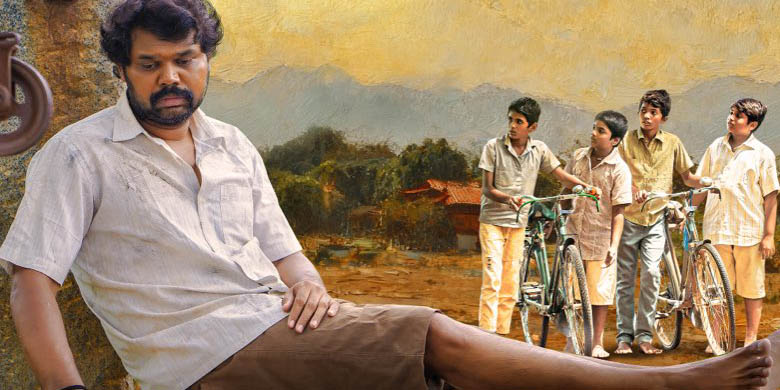
Kinaru Movie Review
A moving story of simple truths
Performances
Story & Narration
Technical Aspects & Music
The multiple film festival award winner movie Kinaru unfolds as an earnest, emotionally rich tale that examines both the innocence of childhood and the fundamental human longing for dignity and survival. Director Harikumaran builds his narrative around four nine year old boys who are shooed away from a neighbour’s well, prompting them to attempt digging one of their own. What initially appears to be a playful mission slowly transforms into a deeper pursuit, revealing how the idea of water, something adults often take for granted becomes a symbol of identity, belonging, and hope for these children.
The first half moves with a gentle, unhurried rhythm, exploring the boys’ motivations and dynamics. At the centre is Pethappan, played with striking sincerity by Kanishkumar. His character is torn between the carefree impulses of a child and the heavier realities he witnesses at home, where his grandmother Raasamma is his lone emotional anchor. Their bond becomes the emotional backbone of the narrative, and the film authentically captures how children, despite their limited understanding of the world, often sense the weight of adult struggles.
The second half deepens the emotional stakes as the adults in the village take shape as fully realized, flawed, yet compassionate characters. Vivek Prasanna’s “Puncture” stands out with a performance layered in pain, resilience, and warmth. His journey, alongside Raasamma’s unwavering determination despite her frailty, lends the film a tender parallel between youthful optimism and mature endurance. As the boys continue digging with relentless hope, the film subtly draws a line between the innocence of their attempt and the generational hardships surrounding them, making their pursuit feel both symbolic and profoundly personal.
Technically, Kinaru is crafted with admirable restraint. Gautham Venkatesh’s cinematography favors intimate frames that feel lived-in rather than stylized, giving the visuals a quiet poetic quality. The editing by Gowtham Raj maintains a rhythm that lets emotions breathe without becoming indulgent. Bhuvanesh Selvanesan’s music, soft and contemplative, enhances the film’s emotional cues without overwhelming them, often acting as the silent voice of the characters’ inner worlds.
In its final stretch, Kinaru stands as a heartfelt reflection on fundamental wants: the want for water, the want for dignity, and the want for connection. It doesn’t rely on grand revelations or dramatic turns; instead, it draws its power from simplicity and sincerity. Despite a pacing that may feel slow for some, the film’s soulful performances and thoughtful film making make it a meaningful watch that resonates long after the final frame.
Kinaru Movie Rating: 3.25/5