
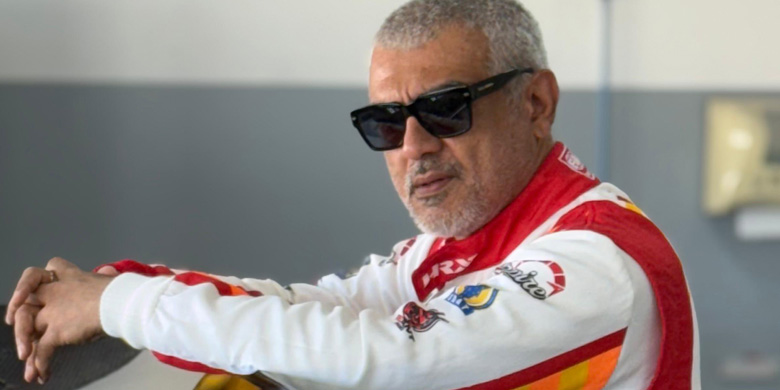
Ajith Kumar’s life today feels like a high‑speed race between roaring engines and the quiet hum of cinema lights. His team recently secured a fourth‑place finish in the Barcelona 24H, also placing third in the AM class, yet he chose to keep the celebration modest – sensitive, in part, to the shadow of the Karur tragedy. His restraint reflects more than humility; it signals someone who knows well that every triumph is fragile.
Because behind the veneer of glamour, Ajith often reminds us, racing is not a game for the wealthy alone. He points out that 80 percent of drivers struggle to land sponsorships, no matter how good they are. The logistical hurdles – international transport, customs, technical compliance are immense. Still, he holds faith that systemic support, regulatory ease, financial backing, infrastructure can help Indian motorsport catch up to global benchmarks.
On the film side, Ajith has been clear: he will only take on movie projects during the off‑season of racing. He doesn’t wait for instructions. With his team’s European racing calendars running March through October (with an exception for a one‑off in Dubai), his window to shoot is tight, between November and February. He says this carefully measured balance lets him honor both passions, without one disrupting the other.
His next film, provisionally titled AK64, is already stirring excitement. He reportedly revealed that its script is in progress, and that filming may begin this November, with hopes for a 2026 summer release. Industry whispers suggest director Adhik Ravichandran will helm it, continuing their collaboration after Good Bad Ugly. There’s talk of a bigger, more universally appealing narrative. Production houses have reportedly negotiated fiercely – early reports claimed Ajith’s initial salary demand was 200 crore, but the project’s financial structure may evolve (some say via no‑salary models or revenue sharing).
On the promotional front, Ajith has expressed a desire for his future series work to spotlight Indian cinema itself. He wants not just to act but to help carry India’s stories further forward, beyond commercial constraints. It’s a message rooted in humility: “Don’t promote me – promote the sport, the stories, the possibilities.”
Amid these professional arcs, one steady force remains central – his wife Shalini. Since their marriage in 2002, as their children have grown and schedules have intensified, she has quietly kept the home, the routines, and the grounded reality that enables both of his worlds to function. Ajith is vocal in acknowledging that the sacrifices she makes – logistics, emotional labor, stability – rarely make headlines. When internet videos interpret affectionate gestures between them as spectacle, he gently clarifies: these are offered out of respect and love, not for show.
As Ajith accelerates between racetrack and reel, advocating for change, trusting in his team, and recognizing the silent pillars in his life, what emerges is a story less about stardom and more about balance, purpose, and intention. His journey is still unfolding – in every lap, every frame, and every unseen moment in between.