
TN 2026 Movie Review: A political drama with moments that work and hold attention
TN 2026 showcases a political journey filled with ambition and conflict, where performances and select moments drive the film’s impact.
TN 2026 Movie Review
Partially engaging political drama
Performances
Story & Narration
Technical Aspects & Music
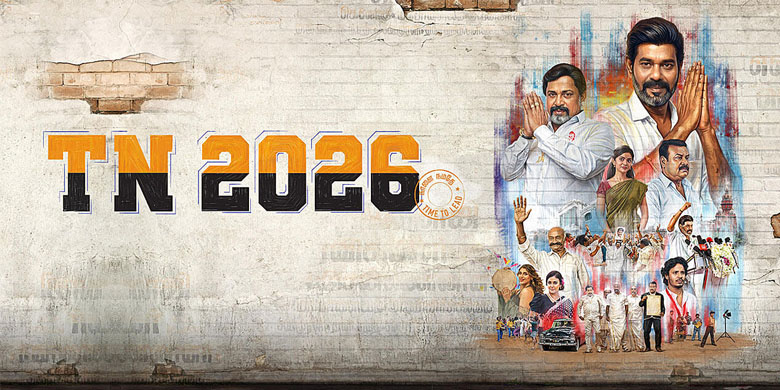
TN 2026, which generated strong curiosity with its politically charged trailer, has now hit theatres as a satire that blends cinema with politics. The film explores the fine line between stardom and power, while also hinting at real-life parallels that are hard to miss. Naturally, questions arise on whether it targets or praises a leading superstar who recently entered politics, and that intrigue forms the base of this film.
The story revolves around Kulkanth Kumar (Natraj), who arrives in Tamil Nadu from North India with the dream of becoming a leading actor. His early phase is filled with struggles, as he lacks both support and direction. At this crucial point, Thambi Ramaiah’s character steps in and becomes his backbone. As a wealthy and influential figure, he goes to great lengths to shape Kulkanth’s career, even selling his own assets. With this strong support system, Kulkanth gradually rises and eventually becomes one of the top stars in Tamil cinema.
As his popularity grows, Kulkanth transforms his fan club into a people’s movement. This move triggers speculation about his political ambitions. Soon, attention from authorities increases, and pressure begins to build around him. In response, Kulkanth launches his own political party with a clear goal of becoming Chief Minister in 2026. The rest of the film explores whether he achieves this ambition and what challenges he faces along the way.
Natraj delivers a confident performance, balancing innocence and authority effectively, with the interval block standing out as a powerful moment. Thambi Ramaiah adds emotional depth, while MS Baskar, Ilavarasu, and Redin support the narrative well.
The first half of TN 2026 works effectively, as it focuses on the rise of Kulkanth and his transition into politics. The narrative moves at a steady pace and keeps the audience engaged. However, the second half loses some grip. While it reflects several contemporary developments, the screenplay tends to go in circles, making portions feel repetitive. A tighter approach here could have elevated the overall impact.
Technically, the film does its job well. The cinematography remains neat and functional, while Dharbuka Siva’s background score stands out and enhances key moments. The writing deserves appreciation for attempting a bold and relevant subject. The film takes subtle digs at the film industry and political landscape without becoming overly direct. Some dialogues, especially those about loyalty and support systems, feel strikingly relevant and even sparked noticeable reactions among audiences in theatres.
Overall, TN 2026 is a fairly engaging political satire that works in parts. Despite its uneven second half, the film holds attention through its performances and its timely theme. It presents a reflection on cinema and politics in a subtle manner, while also delivering a message about responsible voting at a crucial time.
TN 2026 Movie Rating: 3/5